PROPHETIC PEDAGOGY: A PROFESSIONAL DEVELOPMENT PROGRAM
FOR ISLAMIC SCHOOL EDUCATORS AND LEADERS
Parables of the Quran and Sunnah in Teaching
with Shaykh Abdalla Idris Ali
Monday - Thursday
April 22 - 25
2:30 pm - 4:00 pm EST
Monday, April 22
Session 1: Significance of Parables
Tuesday, April 23
Session 2: Parables of Animals
Wednesday, April 24
Session 3: Parables of Objects
Thursday, April 25
Session 4: Parables of Nations/Peoples
REGISTRATION
Individuals
Registration Fee: $25
Schools
Registration Fee: $250
Note: All session recordings will be made available to registered participants.
SESSION INFORMATION
Session One: Significance of Parables
This course begins with an introduction of the significance of the parables in Quran and Sunnah of the Prophet SAW. This topic is dealt with by many scholars such as Imam Az-Zarkashi and Imam Al-Shafi who say that no one should interpret the Quran until one understands the parables of the Quran. Iba Al-Qaym has written a whole book titled “The Parables of the Quran”. In recent history, Ahamed Ibn Tahoon wrote a five-volume book on this topic as well. Among the recent works on this topic is the book by our young scholar Dr. Yasir Qadhi which is recommended to be read by everyone taking this course. Dr. Qadhi also had a video series on YouTube of 29 episodes on this topic. The Islamic university of Riyadh has also covered this topic in more than twenty sessions. In Cairo, Egypt the Quran radio assigned 82 sessions on the parables of the Quran.
In this session we are going to deal with the following topics:
Session Two: Parables of Animals
This session will deal with people's communities and nations that are used as parables in the Quran. Since the Quran deals with a large range of parables we will try to cover as much as we can of these topics. Due to the wide range of these parables, we will focus on a select group of them such as the similitude of Prophet Isa and Prophet Adam and the parable of deaf and blind people as well as the Shaytan.
Session Three: Parables of Objects
In this section we will try to cover the insects and animals that are used as parables such as the fly, the mosquito, the dog, the donkey and the crow. This session will also deal with all the miracles that these animals and insects cover.
Session Four: Parables of Nations/Peoples
This session will cover other types of parables such as words, objects, and astronomical phenomena. As well as topics such as the wind, rain, fire, storms, thunderbolts and many other aspects of nature.
This course begins with an introduction of the significance of the parables in Quran and Sunnah of the Prophet SAW. This topic is dealt with by many scholars such as Imam Az-Zarkashi and Imam Al-Shafi who say that no one should interpret the Quran until one understands the parables of the Quran. Iba Al-Qaym has written a whole book titled “The Parables of the Quran”. In recent history, Ahamed Ibn Tahoon wrote a five-volume book on this topic as well. Among the recent works on this topic is the book by our young scholar Dr. Yasir Qadhi which is recommended to be read by everyone taking this course. Dr. Qadhi also had a video series on YouTube of 29 episodes on this topic. The Islamic university of Riyadh has also covered this topic in more than twenty sessions. In Cairo, Egypt the Quran radio assigned 82 sessions on the parables of the Quran.
In this session we are going to deal with the following topics:
- The types of parables in the Quran.
- The definition of the parables of the Quran.
- The usage of these parables in Quran and Sunnah.
- What is needed to understand these parables.
- Topics that are covered by these parables.
- The best ways to use these parables in teaching.
Session Two: Parables of Animals
This session will deal with people's communities and nations that are used as parables in the Quran. Since the Quran deals with a large range of parables we will try to cover as much as we can of these topics. Due to the wide range of these parables, we will focus on a select group of them such as the similitude of Prophet Isa and Prophet Adam and the parable of deaf and blind people as well as the Shaytan.
Session Three: Parables of Objects
In this section we will try to cover the insects and animals that are used as parables such as the fly, the mosquito, the dog, the donkey and the crow. This session will also deal with all the miracles that these animals and insects cover.
Session Four: Parables of Nations/Peoples
This session will cover other types of parables such as words, objects, and astronomical phenomena. As well as topics such as the wind, rain, fire, storms, thunderbolts and many other aspects of nature.
COURSE INSTRUCTOR
|
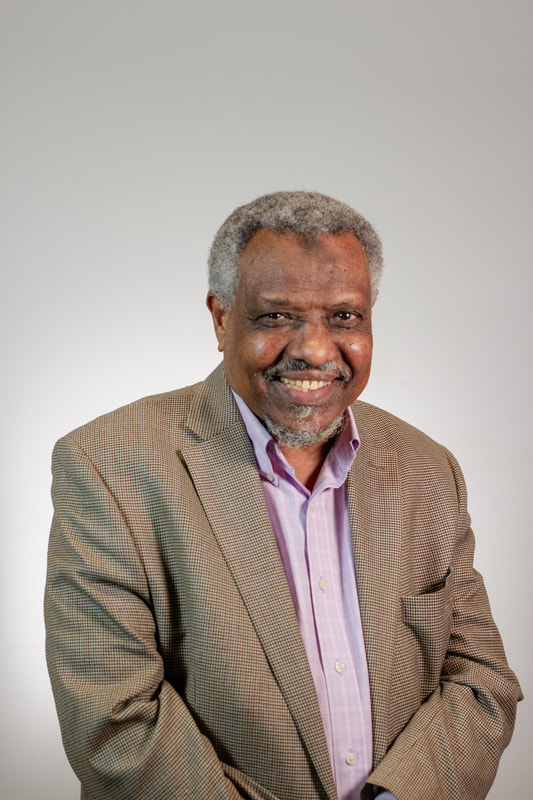
Shaykh Abdalla Idris Ali, PhD served as imam and director, and founded the first full-time Islamic school in Toronto, Canada. He served as the principal of ISNA Islamic Community School for 17 years. He also served on ISNA’s Executive Council, Majlis Ash-Shura, Youth and Education Committee and as president of ISNA for two terms. He is the chair of the Islamic Media Foundation, a member of NAIT Board, a founding member of CISNA, and chair of ISNA Education Forum. Sheikh Abdalla was appointed director for CIENA in Kansas City, Missouri. He served on the board of trustees of IBERR, which serves minority communities. He is currently working as Senior Community and Religious Advisor at ISNA Canada.
|
REGISTRATION
School Registration
If you would like us to register your school, please click on the button below and follow the two-step process.
For any questions, please contact us at [email protected]
If you would like us to register your school, please click on the button below and follow the two-step process.
For any questions, please contact us at [email protected]
CERTIFICATES
For participants interested in earning certificates, attendance and the completion of a self-assessment is required. There are no CEUs or certificates for participants who are engaging asynchronously through recorded videos. Attendance will be recorded by CICW administration.
For participants interested in earning certificates, attendance and the completion of a self-assessment is required. There are no CEUs or certificates for participants who are engaging asynchronously through recorded videos. Attendance will be recorded by CICW administration.
ABOUT THE PROGRAM
Prophetic Pedagogy explores the teaching styles of the Prophet Muhammad (PBUH) as found in the Qur'an and Sunnah, and complements them with contemporary research on teaching and learning for an Islamic school context.
Prophetic Pedagogy project seeks to provide Islamic school educators with tools, practices, and concepts to help shape education within Islamic schools today. We want educators to be fully equipped to teach the Message of Allah in a global context that doesn’t support faith-based identities, just as the Prophet experienced. We want educators to lead the youth in understanding how to resist oppression and disrupt injustices around them, just as the Prophet demonstrated. And we want educators to be fully engaged in the realities of today’s context, just as the Prophet was fully engaged in his contextual reality. Our educators need to be able to teach students through technology, who struggle with their identity, and who face challenges with social norms and practices. We feel that with a systematic examination of the Prophet’s pedagogy, we will be able to advance teaching practices that can transform today’s Islamic schools to be the schools that Muslims need in today’s day and age.
PROGRAM DIRECTORS
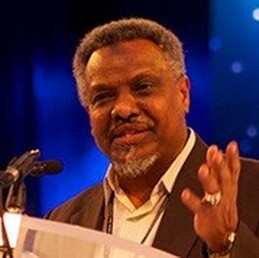
Shaykh Abdalla Idris Ali, PhD served as imam and director, and founded the first full-time Islamic school in Toronto, Canada. He served as the principal of ISNA Islamic Community School for 17 years. He also served on ISNA’s Executive Council, Majlis Ash-Shura, Youth and Education Committee and as president of ISNA for two terms. He is the chair of the Islamic Media Foundation, a member of NAIT Board, a founding member of CISNA, and chair of ISNA Education Forum. Sheikh Abdalla was appointed director for CIENA in Kansas City, Missouri. He served on the board of trustees of IBERR, which serves minority communities. He is currently working as Senior Community and Religious Advisor at ISNA Canada.
|
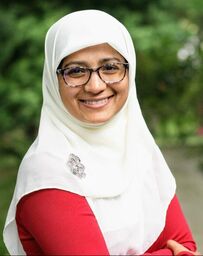
Rehenuma Asmi, PhD is an executive board member of CICW, and a convener of teacher training program. She received her bachelors from Georgetown University with double majors in Arabic and Government. Dr. Asmi completed her Masters in Teaching from American University and her PhD in Anthropology and Education from Columbia University Teachers College. She served as Assistant Professor of Religion and Education at Allegheny College from 2013-7. Dr. Asmi's research interests are in the areas of bilingual education, education policy and socio-cultural effects of education on Muslim family life.
|
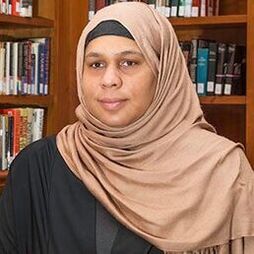
Amaarah DeCuir, EdD is an executive board member of CICW, and a convener of teacher training program. She is is a professorial lecturer in the School of Education at American University in Washington, DC. Dr. DeCuir is an Education Leadership scholar whose work, broadly speaking, focuses on the intersections of leadership, gender, and diverse cultural contexts to advance social justice. She has a bachelor's degree from the University of California at Berkeley, an M.Ed. from Howard University and an Ed.D. from George Washington University. With over 20 years of P-20 teaching and leadership experiences, she uses her work to impact praxis and scholarship.
|